


By: Alison Marras
February 17, 2026
What’s Inside: I’m breaking down why elimination diets like AIP and Low FODMAP plateu, how they’re meant to be used, and how to get past them ultimately by healing your gut so your symptoms can be eased and lfie opens up again. Don’t miss my free class that goes even deeper right here.

As a Nutritional Therapy Practitioner and foodie… I’ve devoted my work to making healing a more joyful and confident experience. Through my cookbook and many years of recipe blogging… I started with making tasty dishes that strategically reduced triggers and could support healing. Then, personally and professionally… started experiencing ways to confidently open our diets up more by healing the gut and building more total body resilience. I’m sharing in this post how we get it done in our practice.
You start with the best intentions.
Cut gluten.
Cut dairy.
Sugar too.
Maybe nightshades.
Maybe garlic, onions, beans, eggs, soy… honestly, at some point, you are just eating air and hoping for the best.
And at first? You feel kinda better.
Less bloating.
Less brain fog.
Skin calms down a little.
You think, “Finally. I figured it out.”
But then…
The foods keep shrinking.
The symptoms creep back.
Your body feels fragile instead of resilient.
Not to mention you’re wondering how to keep this going while living real life.
And now you are wondering:
Why is my elimination diet not working anymore?
Let’s talk about it.
Because this is not a matter of willpower.
And it is not because you “did it wrong.”
An elimination diet is meant to be temporary.
Whether it is AIP, Low FODMAP, or a custom protocol your doctor gave you, the goal is to:
While you’re working on healing your gut (that’s the nuance that’s usually missed… don’t worry, we’ll get there)
That is it. It’s not exactly meant to heal your gut all by itself.
It is not meant to be your personality.
It is not meant to last forever.
It is not meant to keep shrinking your world while increasing stress.
When elimination diets are used correctly, they create clarity.
When they are overused, they create fear (and loss of oral tolerance, unfortunately).
And that is where things start to break down.

Here is what most people are not told.
Elimination diets do not fix root causes.
They reduce inflammation or actual triggers… but the real question always should be: “why am I reactive to so many foods or so inflamed to begin with?”
Elimination diets can’t actually rebuild your gut which is going to be required to expand your diet and reduce the inflammation for the long haul (which is what we all really want).
And if your digestion is not functioning well, you can eliminate every food on the planet and still feel inflamed.
Let’s break this down.
When someone removes high FODMAP foods or goes on AIP and feels better, it makes sense.
You reduced the inflammatory load or food that’s hard to digest with a struggling gut.
But digestion is not just about removing triggers.
It is about optimizing:
• Stomach acid
• Bile flow
• Enzyme production
• Gut lining integrity
• Nervous system regulation
• Microbiome balance
If those systems are weak, removing foods gives temporary relief.
It does not restore resilience.
And eventually, even “safe foods” start to feel reactive.
That is when people say:
“I feel like I am reacting to everything.”
I promise you, that’s not actually in your head… this is where overcorrecting with elimination diets really starts to backfire. You can and will keep reacting to more and more foods you eat regularly when issues like “leaky gut” (or intestinal hyperpermeability) is left unchecked.

This is the part most gut protocols skip.
You can eat the “cleanest diet” in the world.
But if you are:
• Eating in a rush
• Scared of food
• Chronically stressed
• Over-restricting
• Monitoring every symptom obsessively
Your body stays in threat mode (AKA: fight/flight/freeze/fawn mode).
And digestion does not thrive or heal in threat mode.
Low stomach acid.
Poor enzyme output.
Sluggish motility.
Food starts to feel like the enemy when really your body is just overwhelmed and begging for help by throwing symptoms.
If you do not regulate the nervous system and eat more mindfully, elimination diets eventually plateau, and food sensitivities worsen.
This is where it spirals.
Symptoms return.
So what do you do?
Cut more.
Now it is nightshades, eggs, nuts, beans, fruit… anything you hear might be “bad” or inflammatory.
Now you are scared to travel.
Scared to eat out.
Scared to try new foods.
SIGH. Are we seeing a trend here? This is highly stressful both physically and mentally.
Instead of constant contraction… we should be focusing on what we add.
The goal of gut healing is expansion.
More whole foods.
More flexibility.
More confidence.
So if you’ve been told that healing your gut or getting an autoimmune condition into remission involves deleting 100 foods from your diet… let this be your turning point. It’s just not true.
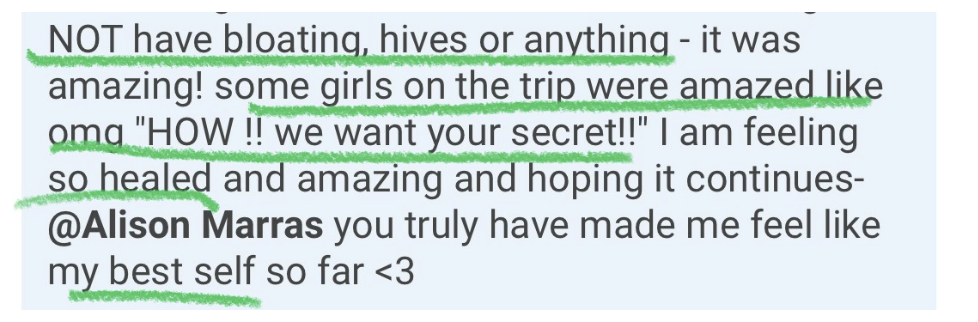
You betchya… really, it can happen with any rigid elimination diet.
AIP and Low FODMAP can be powerful short-term tools.
But neither was designed to be permanent. We’ve got to read the fine print.
When people stay on these diets long-term without rebuilding digestive capacity, microbiome diversity can decrease. This means the “good guys” in your gut die off and aren’t doing key responsibilities for your body… things continue to slip and get missed, which only increases inflammation.
And when microbiome diversity decreases, food tolerance decreases.
So ironically, staying restricted too long can make you more sensitive.
Not less.
It’s really a strong illustration of the pendulum swinging, so we must be intentional about this overall process.
“I used to tolerate this. Now I can’t.”
::cue panic::
Nobody needs this, and I’ve been there personally… many clients have come to us in this state, and it feels overwhelming and frustrating to say the least.
But usually, what’s happening is:
So instead of asking, “What food should I cut next?”
The better question is: “What system needs support?”
Healing is NOT about perfection.
It’s about consistently supporting the foundations so your body can heal. It might sound unsexy, but it gets more fun when you feel the effects and stop thinking about food all day.

If elimination diets stop working, the solution is not another elimination diet.
It is a phased approach.
Here is how we approach this with clients.
We simplify and focus on strengthening those foundations…
Let’s stop overcomplicating everything becase the simpler the better.
No magic pills or fancy biohacks required. Just foundations that your body requires to heal and thrive.
We support:
And of course, weed out any deeper infections and imbalances through functional gut testing.
This is game-changing for seeing what else is happening underneath the surface for root-cause healing.
This is where resilience starts returning, symptoms continue to fall by the wayside, and you’re tolerating more foods.
We aren’t throwing GF spaghetti at the wall in a chaotic way. But we also don’t need to plan it all out in a color-coated bullet journal.
But food reintroductions are all an experiment so some level of organization and intentionality will set you up for success.
All with nervous system support and the rest of the foundations mentioned above are happening daily, easily, so the body is in the best environment possible for experimenting.
This is where confidence comes back, and the world of dining out… travel… feeling at ease in your body and with food again just keeps getting stronger.
If you have been stuck on elimination diets for years and still feel inflamed, tired, bloated, reactive, or anxious around food, it does not mean you lack discipline or did a diet “wrong”.
Hopefully, if you’ve read this far in my post, you’re starting to realize there’s just a lot more to it.
It usually means you have been calming symptoms without rebuilding function or correcting imbalances.
And the fabulous news is… that is fixable.
But not by cutting more. So let’s just get that off the table already.
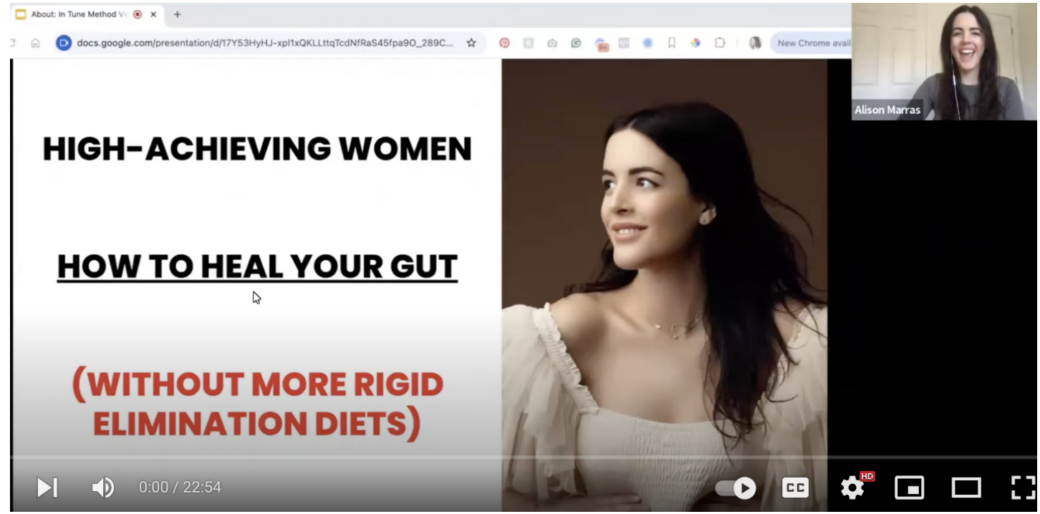
I’d love to teach you. In my free class, I walk through:
• Why elimination diets plateau
• The 3 phase gut rebuilding framework
• How clients expand foods without flaring
• How to stop living in food fear
If you are ready to move from restriction to resilience, watch the full 3-step training here:
Because elimination diets reduce triggers, but they don’t rebuild digestive function. If stomach acid, bile flow, enzymes, motility, gut lining integrity, and your nervous system aren’t supported, you can remove “problem foods” and still stay reactive. The restriction can calm symptoms short-term, but resilience requires rebuilding.
AIP can be a helpful short-term tool, especially in a flare. But it’s not meant to be permanent. Long-term restriction can make life smaller, increase food fear, and sometimes reduce tolerance over time if you’re not actively rebuilding digestion and planning strategic reintroductions.
Usually, it’s not the food “randomly becoming toxic.” It’s that your system is overwhelmed. Common drivers are low digestive output (acid, bile, enzymes), gut lining irritation, immune hyper-reactivity, gut-brain stress loops, and inconsistent motility. Your body isn’t weak. It’s protective.
Don’t “wing it.” Use a structured plan and start with the lowest-risk foods for your body, one change at a time, with clear tracking. Reintroductions go better when digestion basics and nervous system support are in place first.
Start with a step-by-step reintroduction plan and follow a clear order, serving size progression, and symptom tracking method. Here’s a link to my AIP Reintro guide: https://foodbymars.com/aip-reintroduction-guide/
No. AIP can help some people short-term, but Hashimoto’s remission is not “AIP or bust.” Many people do better with a personalized approach that supports digestion, nutrient status, stress, sleep, and inflammation without staying locked in a super restrictive food list. I have a post about one of our many clients who got into remission without AIP: https://foodbymars.com/no-aip-hashimotos-case-study/
It depends on what’s driving the reactivity, how long you’ve been restricted, and what your body needs first. Some people notice early wins in a few weeks (less bloat, steadier digestion, less anxiety around food). Bigger tolerance shifts usually happen as digestive function and nervous system regulation build over time.

Error: No feed with the ID 2 found.
Please go to the Instagram Feed settings page to create a feed.

Subscribe to my newsletter, and you’ll receive the latest recipes and my best wellness tips to make this a lifestyle!

join the conversation
no comments